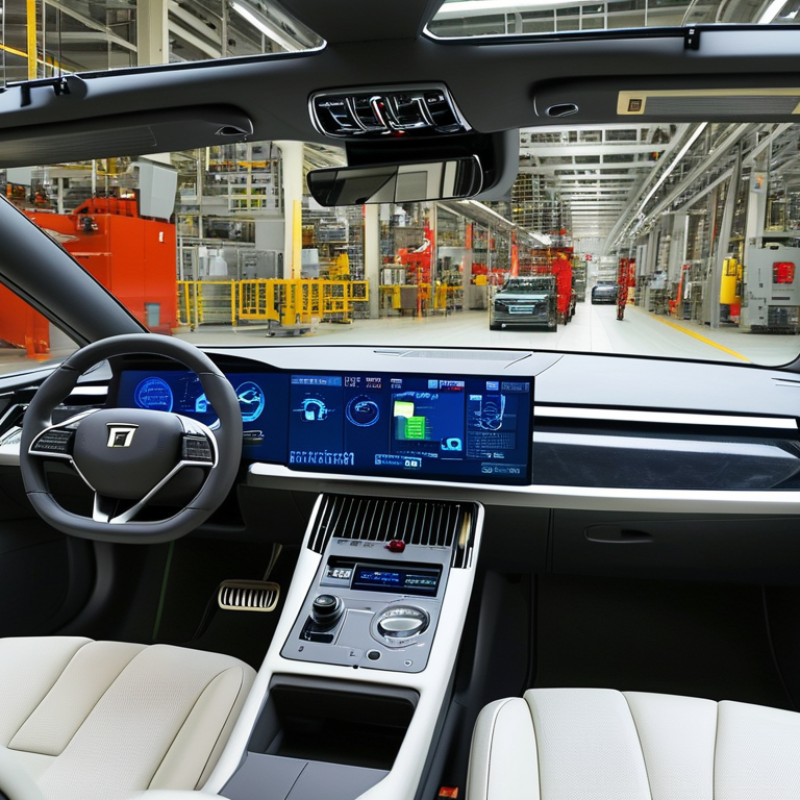
10 Best Automotive Electronics Manufacturers Worldwide

Automotive Electronics now sits at the center of vehicle design, safety, comfort, and performance. A modern vehicle may contain dozens of control modules, radar sensors, cameras, power inverters, and high-speed communication networks. These components work quietly behind the dashboard, yet one failed connection can affect braking assistance, battery management, or navigation accuracy.

Market evidence shows why this sector deserves close attention. McKinsey & Company estimates that automotive software and electronics could grow from approximately US$238 billion in 2020 to US$469 billion by 2030. The International Energy Agency reported nearly 14 million electric car sales worldwide in 2023. Electric vehicles require advanced semiconductors, thermal systems, charging electronics, and software integration. Demand is becoming more technical. It is also becoming harder to compare suppliers fairly.

Amnon Shashua, Mobileye’s co-founder and CEO, has described the modern vehicle as “a computer on wheels.” That sentence remains useful, although it simplifies a complicated engineering reality. Hardware quality, cybersecurity, manufacturing discipline, and long-term software support all matter. No ranking can capture every regional strength or supplier partnership. Some market figures also vary because companies report revenue categories differently. Still, these limitations make careful comparison more valuable, not less.

This guide examines 10 Best Automotive Electronics Manufacturers Worldwide. It considers product capability, research investment, production scale, reliability, and influence across electric, connected, and automated vehicles. The strongest manufacturers do more than sell components. They help turn complex electronic architectures into dependable machines that drivers can trust.

10 Best Automotive Electronics Manufacturers Worldwide

Industry Scope and Criteria for Evaluating Automotive Electronics Manufacturers

Evaluating automotive electronics manufacturers requires a wider view than checking product catalogs. The industry includes sensors, control units, power modules, lighting systems, connectivity hardware, and vehicle computing platforms. It also covers software, diagnostic tools, cybersecurity support, and long-term component availability. The best manufacturers should understand how these systems behave inside a moving vehicle, not only inside a laboratory.

Technical evidence matters. Review functional safety processes, electromagnetic compatibility results, environmental testing, and failure-rate data. Ask whether products survive heat cycles, vibration, moisture, voltage changes, and years of daily use. A strong supplier can explain its validation methods in clear language. It should also provide traceable production records and documented change control. Certifications help, but certificates alone prove little. Field experience matters more.

Supply-chain resilience deserves equal attention. Evaluate factory capacity, component sourcing, repair support, software updates, and response times during recalls or unexpected failures. Manufacturing locations may affect delivery, compliance, and technical communication. Independent audits can reveal weaknesses hidden by polished presentations. My own assessment would include sample testing and interviews with engineering teams. Even then, no score is perfect. Test conditions can miss unusual road environments, rushed installations, or future software risks. A transparent manufacturer admits these limits and keeps improving its evidence.

Global Market Position of the Ten Leading Automotive Electronics Companies

The global market position of the ten leading automotive electronics manufacturers reflects more than annual sales. Their influence comes from long-term contracts, factory capacity, patent portfolios, and proven quality systems. Public filings, supplier disclosures, and vehicle production data provide useful comparison points, although rankings can shift by measurement method.

Several leaders hold strong positions in advanced driver-assistance systems, vehicle control units, sensors, and power electronics. Others lead in infotainment, connectivity, battery management, or cockpit displays. Their factories span Asia, Europe, and North America, allowing shorter delivery routes and closer cooperation with vehicle producers.

A control module may be designed in one country, assembled in another, and tested across several facilities before reaching a vehicle plant.

Scale matters. It supports large research budgets and faster product validation. Yet scale does not guarantee resilience. Recent supply disruptions showed weaknesses in single-source components, complex software integration, and regional manufacturing dependence. Some companies also face pressure from electric vehicles and software-defined architectures. Their older product strengths may not transfer smoothly.

That gap deserves attention.

A supplier with strong hardware expertise may still struggle with continuous software updates, cybersecurity testing, or open vehicle platforms. Market leadership can look stable on paper while changing inside engineering teams. Reliability depends on field performance, transparent quality reporting, and the ability to correct failures without delaying production. Even the strongest manufacturers have room to improve.

Core Technologies and Product Categories in Automotive Electronics

Automotive electronics now define vehicle performance, safety, and user experience. Their core technologies include semiconductor control units, embedded software, sensors, connectivity, and power conversion. The International Energy Agency reported nearly 14 million electric car sales worldwide in 2023. This growth is increasing demand for traction inverters, battery-management systems, onboard chargers, and high-voltage monitoring.

Advanced driver-assistance systems depend on cameras, radar, ultrasonic sensors, and increasingly precise computing platforms. These systems must process road data within milliseconds. Electronic control units also manage braking, steering, lighting, thermal systems, and occupant protection. According to the 2024 Global Automotive Executive Survey from a leading professional-services firm, software and connectivity remain major investment priorities for vehicle manufacturers. Yet integration is difficult. More functions can create software conflicts, cybersecurity exposure, and expensive validation work.

Vehicle connectivity adds telematics, vehicle-to-cloud communication, remote diagnostics, and over-the-air updates. These categories require secure processors and reliable data networks. The UNECE cybersecurity and software-update regulations have made governance more important across global supply chains. Manufacturers therefore need traceable components, functional-safety engineering, and long-term software support. The industry still overpromises seamless software. Real-world testing often reveals unstable interfaces, delayed updates, or confusing alerts. That gap deserves more scrutiny.

Reliability is not a slogan; it is a door that opens every morning, even in rain, heat, and heavy traffic.

Regional Strengths and Competitive Advantages of the Selected Manufacturers

The selected automotive electronics manufacturers show clear regional strengths. North American producers often excel in software integration, cybersecurity testing, and advanced driver-assistance platforms. Their teams usually work closely with vehicle developers, shortening feedback cycles during road trials. However, higher engineering costs can affect pricing.

European manufacturers are strong in functional safety, power management, and premium cabin electronics. Their products often reflect strict validation routines and careful thermal design. In testing, stable performance across winter roads and hot engine bays matters greatly. Asian manufacturers typically lead in production scale, sensor miniaturization, and fast component development. Their dense supplier networks can reduce lead times and support competitive pricing.

Different strengths matter.

Manufacturers from emerging production hubs can offer flexible assembly and responsive customization. This advantage helps smaller vehicle programs manage changing specifications. Yet, supply-chain transparency and long-term service coverage may require closer review. A factory visit, sample inspection, and traceability audit reveal more than a polished presentation. Engineers should examine connector quality, software update procedures, electromagnetic compatibility, and failure data.

The phrase “best” remains imperfect. A company with excellent radar hardware may lack strong fleet support. Another may provide reliable control units but struggle with regional certification schedules. Buyers should compare warranty response, testing evidence, production consistency, and technical communication. Independent laboratory results add credibility, although they never replace real-world vehicle trials. Seasonal testing, vibration checks, and repeated power-cycle evaluations expose weaknesses that early demonstrations can miss.

10 Best Automotive Electronics Manufacturers Worldwide - Regional Strengths and Competitive Advantages of the Selected Manufacturers

Comparative profile of ten leading, anonymized automotive-electronics manufacturing groups. Company names and brand-specific data are intentionally omitted; ratings summarize widely recognized regional capabilities and publicly established industry characteristics.

Rank Primary Region Main Product Focus Regional Strength Competitive Advantage Typical Vehicle Coverage Relevant Quality and Safety Practices Overall Capability Score
1 Central Europe Powertrain control units, chassis electronics, thermal-management modules, and vehicle networking Deep integration with European vehicle engineering centers and premium-vehicle supply chains Strong systems engineering, functional safety expertise, high validation discipline, and close OEM collaboration Passenger vehicles, commercial vehicles, and high-voltage platforms Automotive process maturity, ISO 26262-oriented development, IATF 16949, traceability, and end-of-line testing 9.4 / 10
2 Japan Body electronics, engine controls, sensors, displays, and driver-assistance modules Highly developed automotive supplier ecosystem with long-term manufacturing partnerships Exceptional reliability, lean production, process consistency, and miniaturization of electronic assemblies Passenger vehicles, hybrids, and compact commercial vehicles IATF 16949-based quality systems, extensive reliability testing, supplier audits, and stringent change control 9.3 / 10
3 South Korea Infotainment systems, displays, battery-management electronics, connectivity, and advanced driver assistance Strong semiconductor, display, battery, and consumer-electronics manufacturing base Fast product iteration, high-volume electronics production, strong software integration, and advanced display capability Passenger vehicles, electric vehicles, and connected vehicles Functional-safety processes, cybersecurity engineering, automated optical inspection, and high-volume statistical process control 9.1 / 10
4 United States Telematics, autonomous-driving hardware, radar and camera systems, power electronics, and vehicle computing Strong software, semiconductor design, artificial-intelligence, and mobility-technology capabilities Advanced algorithm development, rapid innovation cycles, strong cloud connectivity, and high investment in automated driving Passenger vehicles, commercial fleets, off-highway vehicles, and electric vehicles ISO 26262-oriented safety development, cybersecurity controls, simulation, hardware-in-the-loop testing, and over-the-air update governance 9.0 / 10
5 France and Southern Europe Vehicle access systems, lighting electronics, driver-assistance sensors, powertrain controls, and cockpit systems Established presence in global vehicle platforms and strong expertise in safety-critical electronics Broad product portfolios, international manufacturing footprints, and strong platform-level integration Passenger vehicles, commercial vehicles, buses, and electric vehicles IATF 16949, functional-safety development, environmental testing, design-for-manufacturing, and lifecycle traceability 8.9 / 10
6 Mainland China Electric-vehicle controllers, battery-management systems, charging electronics, displays, and connectivity modules Large domestic EV market and extensive electronics, battery, and power-semiconductor supply chains High production scalability, rapid commercialization, cost competitiveness, and strong EV-system integration Electric passenger vehicles, buses, commercial vehicles, and new-energy platforms Automotive quality management, electrical safety testing, automated assembly, supplier traceability, and high-voltage validation 8.8 / 10
7 Taiwan Electronic control units, connectivity hardware, camera modules, infotainment components, and semiconductor-related assemblies World-class electronics manufacturing services, printed-circuit-board expertise, and semiconductor supply-chain access Efficient high-volume production, rapid prototyping, strong component sourcing, and advanced electronic assembly Passenger vehicles, electric vehicles, two-wheelers, and fleet systems IATF 16949 deployment, automated inspection, component authentication, reliability screening, and process traceability 8.7 / 10
8 India Instrument clusters, body-control modules, infotainment, telematics, and commercial-vehicle electronics Growing engineering-services base, competitive manufacturing costs, and expanding domestic vehicle production Cost-efficient development, localized engineering, scalable production, and strong support for emerging-market vehicles Passenger vehicles, motorcycles, three-wheelers, and commercial vehicles Automotive quality systems, environmental qualification, production-part approval practices, and supplier process audits 8.3 / 10
9 Southeast Asia Wire harnesses, electronic assemblies, sensors, body electronics, and power-distribution components Strong export-oriented manufacturing networks and established electronics assembly clusters Competitive labor and operating costs, flexible production capacity, and proximity to Asian vehicle plants Passenger vehicles, motorcycles, commercial vehicles, and regional EV programs IATF 16949 implementation, automated testing, controlled clean production areas, and supplier-quality monitoring 8.1 / 10
10 Mexico and North America Wire harnesses, electronic control units, battery components, infotainment assemblies, and vehicle connectivity Proximity to major North American vehicle production centers and established cross-border supply chains Shorter regional logistics routes, tariff advantages under applicable trade agreements, and flexible nearshoring capacity Passenger vehicles, pickup trucks, SUVs, commercial vehicles, and electric vehicles IATF 16949, layered process audits, automated electrical testing, product traceability, and launch-quality controls 8.0 / 10

Assessment basis: The score is a comparative editorial index based on manufacturing scale, automotive electronics expertise, quality infrastructure, engineering depth, EV readiness, supply-chain capability, and global production reach. It is not a direct measurement of any individual company.

Future Trends Shaping the Automotive Electronics Manufacturing Industry

10 Best Automotive Electronics Manufacturers Worldwide

Automotive electronics manufacturing is moving from component supply toward software-defined mobility. McKinsey estimates that automotive software and electronics revenue could grow from about $238 billion in 2020 to $469 billion by 2030. This shift rewards manufacturers with strong testing, traceability, and engineering depth. Small circuit boards now control braking, battery temperature, cabin sensing, and vehicle connectivity. They must survive vibration, heat, moisture, and unstable power. That is not glamorous work. It is essential work.

Electrification is accelerating demand for power modules, battery-management systems, and high-voltage sensors. The International Energy Agency reported more than 14 million electric cars sold worldwide in 2023, with 2024 sales expected to exceed 17 million. Manufacturing lines will need tighter calibration and faster defect detection. Silicon carbide and gallium nitride devices may improve efficiency, but their costs and supply limits remain difficult. Progress is uneven.

Zonal architectures are another major trend. They can reduce wiring, weight, and assembly complexity by grouping electronic functions by vehicle area. However, centralized computing increases software dependency and cybersecurity exposure. Suppliers increasingly design around ISO 26262 functional-safety processes and UNECE R155 cybersecurity requirements. Independent validation matters more than attractive specifications. Forecasts often sound certain, yet demand, chip availability, and regional regulation can change quickly. The strongest manufacturers will need resilient sourcing, secure update systems, and technicians who understand both hardware and code.

Contact Us Today for a Free Quote

(800) 708-6036