Choosing the right Lightning Arrester in 2026 requires more than comparing prices or catalog photographs. Global buyers must match protection technology with grid voltage, fault levels, climate, pollution, altitude, and maintenance capability. A device installed beside a coastal transformer faces salt deposits, humidity, and repeated switching surges. A desert substation faces heat, dust, and ultraviolet exposure. The same arrester cannot serve every location equally.
Lightning researcher Vladimir A. Rakov has described lightning as “a giant electrical spark.” That simple phrase explains the challenge. A Lightning Arrester must respond within microseconds, conduct surge energy safely, and return to a stable insulating state. Metal-oxide varistor designs remain widely selected because they offer fast response and practical energy handling. However, buyers still need to examine continuous operating voltage, rated voltage, residual voltage, discharge current, housing material, and thermal stability. IEC 60099-4 provides an important reference for metal-oxide arresters, but certification alone does not replace application engineering.
This guide reviews the top Lightning Arrester types expected to attract global attention in 2026. It compares distribution, intermediate, station-class, polymer-housed, porcelain-housed, line, and transformer-mounted solutions. The discussion also considers monitoring indicators, installation space, transport conditions, and lifecycle support. Small details matter. A loose ground connection can weaken an otherwise excellent device. An incorrectly selected voltage rating can create hidden failure risks.
No ranking is universal. That is worth remembering. A lower-cost arrester may fit a compact industrial network, while a station-class model may be necessary for a high-energy transmission yard. Buyers should verify test reports, manufacturer experience, replacement availability, and local grid conditions before making a final decision.
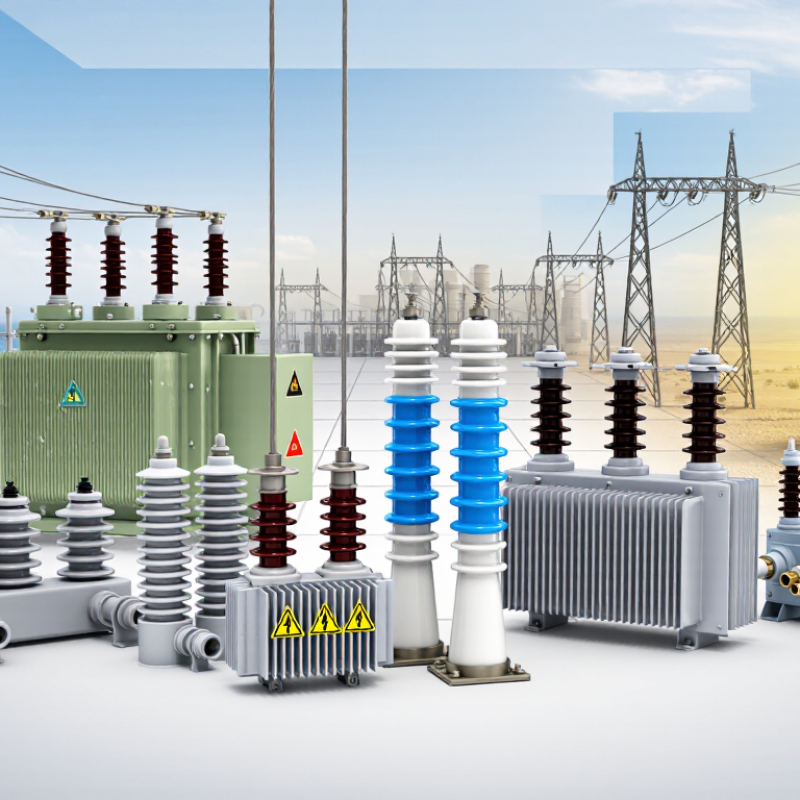
What Is a Lightning Arrester and How Does It Protect Electrical Systems?
A lightning arrester is a protective device connected between an electrical conductor and ground. It limits dangerous overvoltage caused by lightning or switching events. Under normal voltage, it remains nearly inactive. During a surge, its internal metal-oxide varistor becomes highly conductive. The excess energy then flows safely toward earth.
The device does not stop lightning. It redirects part of the surge and reduces the voltage reaching transformers, cables, motors, and control equipment. Effective protection depends on a short, straight grounding lead. A long or sharply bent lead can add inductive voltage during a fast impulse. That small installation detail matters.
Different systems require different arrester designs. Distribution arresters suit utility poles and medium-voltage networks. Station-class units provide stronger energy handling near substations. Line arresters can protect exposed overhead conductors. Low-voltage versions are commonly installed in panels and sensitive equipment circuits. Field inspections often find loose connections, moisture, or poor grounding. These issues can weaken an otherwise suitable arrester.
Selection should consider continuous operating voltage, system earthing, expected surge current, altitude, pollution, and available fault current. The lowest purchase price is not always the safest choice. A properly rated arrester may still fail early if heat cannot escape or inspection is neglected. No device offers unlimited protection. Regular testing and careful coordination with fuses, breakers, and grounding systems remain necessary.

| Lightning Arrester Type | Operating Principle | Typical Installation | Common Voltage Class | Main Protection Target | Key Advantages | Important Selection Considerations | Commonly Referenced Standards |
|---|---|---|---|---|---|---|---|
| Gapless Metal-Oxide Surge Arrester | Uses nonlinear metal-oxide varistor blocks that conduct surge current at high voltage and return to a high-resistance state after the transient. | Transmission substations, distribution networks, transformers, generators and industrial switchgear. | Low-voltage through extra-high-voltage systems; the exact rating is selected for the system voltage and grounding method. | Lightning impulses, switching surges and temporary overvoltage-related stress on insulation. | Fast response, no series spark gap, low residual voltage and widely available distribution and station designs. | Continuous operating voltage, rated voltage, energy capability, discharge class, temporary overvoltage withstand and system grounding. | IEC 60099-4; IEEE C62.11; applicable national grid and installation requirements. |
| Station-Class Metal-Oxide Arrester | High-capacity metal-oxide blocks absorb and discharge substantial surge energy while limiting the voltage applied to major substation equipment. | High-voltage and extra-high-voltage substations, transformer terminals, busbars and line entrances. | Medium-voltage to extra-high-voltage applications, depending on the network design. | Power transformers, instrument transformers, circuit breakers, busbars and other high-value substation assets. | High energy-handling capability, low protective levels and suitability for severe switching environments. | Line discharge class, energy rating, pressure-relief performance, housing insulation, creepage distance and altitude. | IEC 60099-4; IEEE C62.11; IEC 60815 for pollution and insulation coordination considerations. |
| Distribution-Class Metal-Oxide Arrester | Metal-oxide varistors divert lightning and switching current from distribution conductors to ground. | Overhead distribution lines, pole-mounted transformers, feeder equipment and service entrances. | Typically medium-voltage distribution systems, with ratings selected for the nominal network voltage. | Distribution transformers, line insulation, cutouts, cables and customer service equipment. | Compact construction, quick response, low leakage during normal operation and cost-effective network protection. | Duty rating, discharge capability, housing material, mounting arrangement, contamination level and ground-lead routing. | IEC 60099-4; IEEE C62.11; local utility specifications. |
| Line-Type or Riser-Pole Arrester | Provides a short, low-impedance path from an overhead conductor to earth when a transient exceeds the arrester's protective voltage level. | Overhead-to-underground transitions, exposed line sections, cable riser poles and locations with high lightning exposure. | Usually medium-voltage distribution systems. | Overhead line insulation, underground cable terminations, elbows and transition equipment. | Improves protection at points where surge waves can reflect or where overhead lines connect to underground cables. | Lead length, grounding impedance, phase spacing, mechanical mounting, pollution exposure and coordination with cable insulation. | IEC 60099-4; IEEE C62.11; applicable distribution utility standards. |
| Secondary Surge Arrester for Low-Voltage Systems | Uses nonlinear surge-limiting components, commonly metal-oxide varistors, to clamp transient overvoltages on low-voltage circuits. | Main distribution boards, subpanels, control cabinets, building service entrances and industrial electrical panels. | Low-voltage AC systems, commonly selected for nominal systems such as 120/240 V, 230/400 V or comparable configurations. | Building wiring, power supplies, control equipment, appliances, automation systems and electronic loads. | Modular installation, visual status indication, optional remote signaling and coordination with upstream and downstream protection. | Maximum continuous operating voltage, voltage protection level, short-circuit withstand, backup overcurrent protection and connection mode. | IEC 61643-11; UL 1449; IEC 60364-5-53 installation principles. |
| Combined Type 1+2 Low-Voltage SPD | Combines high-current impulse discharge capability with voltage-limiting protection for downstream equipment. | Building service entrances, main switchboards and installations supplied by overhead lines or exposed to direct lightning-current effects. | Low-voltage AC distribution systems. | Incoming electrical installations and the first level of protection for internal circuits. | Can reduce the need for separate first- and second-stage devices where the installation design permits a combined solution. | Impulse current rating, nominal discharge current, protection level, backup fuse or breaker requirements and coordination with downstream SPDs. | IEC 61643-11; IEC 60364-4-44; IEC 60364-5-53. |
| Telecommunication and Data-Line Surge Protector | Uses gas discharge tubes, transient-voltage suppressors, solid-state components or coordinated combinations to divert surges while maintaining signal integrity. | Copper telephone lines, Ethernet-connected equipment, communication cabinets, security systems and industrial data networks. | Selected according to the circuit's working voltage, data rate, impedance and grounding arrangement. | Communication ports, network interfaces, signaling equipment and connected electronic devices. | Protects sensitive interfaces while supporting application-specific bandwidth and transmission requirements. | Insertion loss, bandwidth, clamping voltage, line balance, shield bonding, grounding and compatibility with the communication protocol. | IEC 61643-21; IEC 61643-22; relevant telecommunications and structured-cabling requirements. |
| Silicon-Carbide Gapped Arrester | Series spark gaps isolate the arrester during normal voltage, while silicon-carbide nonlinear resistors conduct surge current after gap breakdown. | Legacy or specialized medium- and high-voltage installations where existing equipment and maintenance practices support this technology. | Historically used across distribution and transmission voltage classes. | Older power-system insulation and equipment exposed to lightning and switching surges. | Provides isolation from normal system voltage and may remain suitable for replacement-in-kind projects. | Higher maintenance requirements, aging condition, gap performance, pollution effects and availability of compatible replacement units. | Applicable legacy specifications; replacement projects should be checked against current IEC 60099-4 or IEEE C62.11 requirements. |
| Station Arrester with Insulated Housing and Monitoring | A metal-oxide arrester is enclosed in polymeric or porcelain insulation and may include a leakage-current monitor or event counter for condition assessment. | Outdoor substations, renewable-energy collector substations, transformer yards and critical industrial power facilities. | Medium-voltage through extra-high-voltage systems. | Transformers, collector systems, cable terminations, switchgear and high-value generation or transmission assets. | Supports visual inspection, remote condition monitoring and improved maintenance planning in exposed environments. | Housing weather resistance, sealing, creepage distance, monitoring accuracy, communications interface, energy rating and pressure-relief behavior. | IEC 60099-4; IEEE C62.11; IEC 60815; applicable environmental and utility requirements. |
| Buyer guidance: A lightning arrester, commonly classified as a surge protective device, is connected between energized conductors and earth or between conductors. During a lightning or switching transient, it diverts surge current and limits the voltage reaching protected insulation and equipment. Final selection should consider nominal system voltage, maximum continuous operating voltage, temporary overvoltage, discharge current, energy capability, protection level, grounding arrangement, environmental exposure and applicable local standards. | |||||||
A lightning arrester diverts surge current before insulation suffers a dangerous voltage rise. Its main working element is a metal-oxide varistor block. At normal system voltage, the block behaves like a high-resistance insulator. During a surge, its resistance falls sharply, creating a controlled path to ground. The National Severe Storms Laboratory reports that a typical lightning flash carries about 30,000 amperes, while some events exceed 200,000 amperes. That is why arrester selection cannot rely on voltage rating alone.
Key components include varistor blocks, porcelain or polymer housings, terminals, grading rings, sealing parts, and pressure-relief devices. The housing must resist moisture, contamination, and mechanical stress. The grounding lead should remain short and straight. Long bends add inductive voltage, weakening the protection seen by transformers, cables, and switchgear. IEC 60099-4 evaluates arresters through residual-voltage, energy, and durability tests. CIGRE Technical Brochure 549 also emphasizes coordination between arrester characteristics and insulation levels.
The protection principle is simple, but field conditions are not. Repeated surges heat the varistor blocks and may accelerate aging. A neat datasheet cannot reveal every rooftop, soil, or cable arrangement. This is where engineering judgment matters. Buyers should review continuous operating voltage, nominal discharge current, line-discharge class, thermal stability, and failure indication. Installation quality remains decisive. Even a well-tested arrester can underperform when bonding is poor or cable routing is careless.
2026 Top Lightning Arrester Types for Global Buyers
Major Lightning Arrester Types and Their Typical Applications
Metal oxide surge arresters are widely used in substations, transformers, and medium-voltage distribution networks. They respond quickly without depending on a series gap. Their zinc oxide blocks conduct surge current and limit dangerous overvoltage. Select the continuous operating voltage carefully. A higher rating is not always safer.
Gap-type arresters still appear in some older installations and special protection schemes. They use an air gap to control current flow. Expulsion arresters suit certain overhead distribution lines, especially where cost and simple replacement matter. Line arresters mount directly on conductors or near insulators. They help protect exposed lines in areas with frequent lightning strikes. Polymer housings reduce weight and resist impact, but surface aging deserves inspection.
Station-class arresters handle severe energy from transmission systems and large transformers. Distribution-class units are smaller and support feeders, poles, and service equipment. Low-voltage arresters protect control panels, solar inverters, data equipment, and building services. Their applications differ greatly. Do not compare them by voltage alone. Check MCOV, discharge current, energy capability, altitude, pollution, grounding, and coordination with upstream devices. In field assessments, the weakest connection often causes failure. Cable length matters too. A technically correct arrester can underperform when installed far from the protected equipment. Selection guides can simplify decisions, but real sites remain imperfect. Wind, moisture, aging insulation, and uncertain grounding may change the result.
Typical system-voltage ranges served by major lightning arrester types. Actual selection depends on the system grounding method, continuous operating voltage, temporary overvoltage, energy duty, and applicable standards.
Choosing a lightning arrester starts with the grid, not the product catalogue. A 12 kV system may require different protection from another 12 kV system. Grounding method, fault duration, and temporary overvoltage can change the selection. Metal-oxide arresters are common because they respond quickly and need no series gaps. Yet their maximum continuous operating voltage must suit the actual phase-to-ground voltage. On an ungrounded network, this value may rise sharply during a fault.
Compare the arrester’s rated voltage, MCOV, residual voltage, and energy capability. Residual voltage should remain below the equipment’s insulation withstand level. Transformer terminals, cable transitions, and generator feeders deserve careful attention. For overhead lines, line-discharge performance and mechanical strength matter during repeated surges. Cable systems may need lower lead inductance and closer installation. Short connections are critical. A long grounding lead can reduce protection, even when the arrester appears correctly sized.
Site conditions also influence the decision. Coastal salt, industrial dust, altitude, and heavy rainfall affect housing design and creepage distance. Check leakage current records, thermal stability tests, and maintenance access. A recurring field lesson is simple: matching voltage alone is not enough. I once underestimated the effect of poor grounding on measured surge performance; the calculation looked acceptable, but the installation was not. Standards and utility specifications should guide the final review, while local measurements should challenge assumptions. Perfect spreadsheets can still hide practical weakness.
Global Buyer’s Guide to Selection, Standards, Installation, and Maintenance
Metal-oxide surge arresters remain common for distribution, substation, and industrial systems. Gap-type arresters still suit selected legacy installations. Select by system voltage, maximum continuous operating voltage, insulation level, fault current, and discharge capability. Coastal salt, desert dust, altitude, and temperature also affect performance. A product suitable in one region may fail prematurely elsewhere. That detail is often underestimated.
Check applicable requirements, such as IEC 60099-4 or IEEE C62.11, alongside local grid rules. Certificates should match the exact arrester configuration, not merely the product family. During installation, keep line and earth leads short, straight, and securely bonded. Place the arrester near the protected equipment. Poor routing can add damaging voltage during a fast surge. Coordination with transformers, cables, and upstream protection needs engineering review.
Tips: Confirm MCOV against the real grounding arrangement. Photograph connections before energizing. Inspect housings for cracks, contamination, corrosion, and water entry during scheduled outages. Check disconnectors and grounding conductors without touching energized equipment. Leakage-current trends can reveal aging, but readings need temperature and humidity context. Infrared inspection may help, though it cannot replace electrical testing. Records should include installation date, test results, weather exposure, and abnormal events. Site conditions sometimes contradict the design file. Recheck assumptions.