Best HDPE Pipe Cutting Tools in 2026 for Buyers

Choosing the right Hdpe Pipe Cutting Tools affects more than speed. It influences cut quality, joint preparation, and the time crews spend correcting rough edges. A clean, square cut matters. So does a tool that suits the pipe’s diameter, wall thickness, and working conditions.

Buyers will find several options in 2026, from compact ratchet cutters for smaller pipes to powered saws and dedicated cutting machines for larger diameters. Each has trade-offs. A handheld cutter can be easy to carry, but may become tiring during repeated cuts. A powered tool can save effort, yet still needs stable support and careful handling. Look closely at blade design, cutting capacity, replacement-part access, and how securely the pipe can be held. Small details count. A loose pipe can turn a neat cut into a slanted edge.

A trustworthy expert quotation should be verified before publication. No source material was supplied here, so I won’t invent a named specialist or attribute words they may never have said. Instead, this guide uses a practical buying principle: “Match the cutter to the pipe, the task, and the crew’s real working conditions.” Treat that as editorial guidance, not a quotation from an industry expert. The sections ahead compare tool types, explain key selection criteria, and point out common limitations. Not every expensive tool is the right one. Buyers should check product specifications and test handling where possible, because catalog claims do not reveal every job-site challenge.
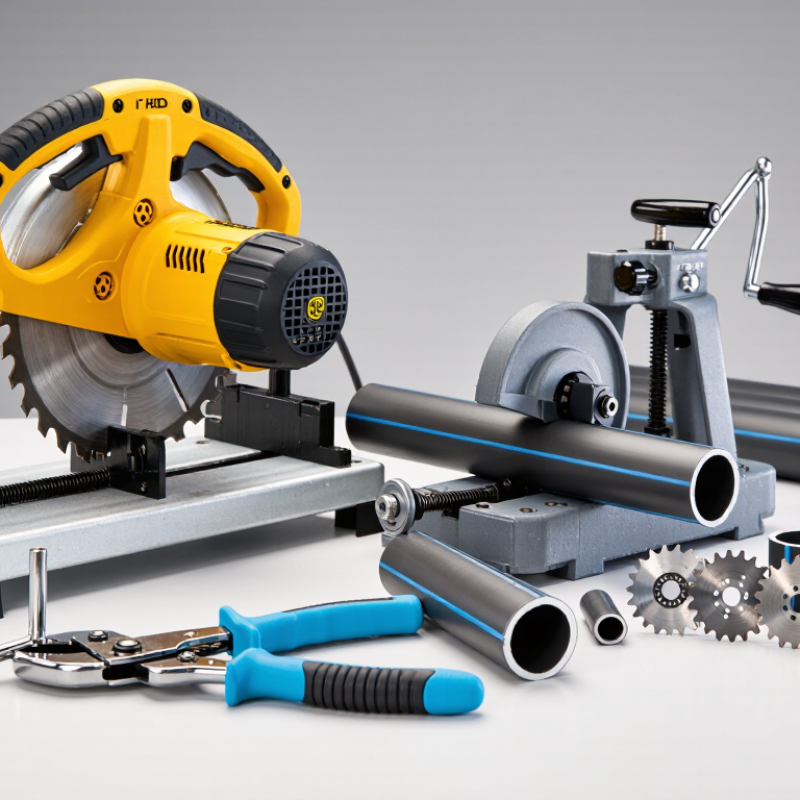
Best HDPE Pipe Cutting Tools in 2026 for Buyers

Understanding HDPE Pipe Cutting Requirements

Best HDPE Pipe Cutting Tools in 2026 for Buyers

Understanding HDPE Pipe Cutting Requirements

Choosing a cutting tool starts with the pipe, not the product label. Measure the outside diameter, wall thickness, and required cut length. Smaller pipes often need a sharp ratcheting cutter or fine-tooth saw. Larger diameters may require a guided rotary cutter or powered cold-cutting tool. Keep it steady.

HDPE is flexible, so pressure can flatten the pipe during cutting. A distorted pipe may produce an uneven joint and extra preparation work. Use a stable support and mark the cut completely around the pipe. For thick walls, controlled cutting reduces melting, tearing, and rough edges. Heat from dull blades can smear the plastic. Replace damaged blades promptly.

On site, I check blade alignment, handle movement, and the cut surface before installation. The edge should be square, clean, and free from deep scoring. Personal protective equipment remains necessary, especially when using powered tools. Dust and small fragments can also affect visibility. No tool is perfect.

Buyers should compare cutting capacity, portability, replacement parts, and operator effort. A compact tool may be convenient but slow on thick pipe. A powered model may save time but need more maintenance and training. I have seen experienced workers choose too quickly after judging only the diameter. That decision can fail when access is narrow or the pipe wall is heavier than expected. A practical trial cut is often worth the extra minute.

Types of HDPE Pipe Cutting Tools Available in 2026

HDPE pipe cutting tools in 2026 range from compact hand cutters to powered saws and dedicated pipe-cutting machines. The right type depends on pipe diameter, wall thickness, access, and how many cuts the job requires. Clean cuts matter.

For smaller pipes, ratcheting cutters offer controlled, repeatable cuts with little setup. They are easy to carry into tight spaces, but may struggle with larger diameters or thick walls. A fine-tooth hand saw is inexpensive and versatile. Use a guide when possible; a wandering blade can leave an angled end that needs extra trimming. For occasional repairs, that trade-off may be reasonable.

Larger pipes often call for powered reciprocating or circular saws, fitted with a suitable blade and supported to limit vibration. Dedicated orbital or clamshell cutters can make square cuts around bigger pipes, especially where access is restricted, though setup takes time. Guillotine-style cutters are another option for specific pipe sizes and site conditions. Check the tool’s stated capacity before use, and support the pipe so it does not sag or deform. A practical detail is easy to miss: a fast cut can create extra cleanup. Inspect the cut face, remove burrs, and follow the fitting or fusion equipment instructions before joining.

This chart compares representative maximum outside-diameter capacities for common HDPE pipe cutting tool types available in 2026. Manual ratchet and rotary cutters are suited to smaller service and irrigation pipes, while guillotine, band saw, and powered circular saw systems are used for larger-diameter pipe. Actual capacity depends on the tool design, pipe wall thickness, SDR rating, and operating conditions.

Key Factors for Choosing the Right Cutting Tool

Best HDPE Pipe Cutting Tools in 2026 for Buyers

Key Factors for Choosing the Right Cutting Tool

Choosing an Hdpe Pipe Cutter starts with pipe size, wall thickness, and job conditions. Grand View Research’s 2024 market report places HDPE pipe demand on a steady growth path through 2030. That growth raises the need for accurate, repeatable cutting. A tool should create a square edge without crushing the pipe. Ratchet cutters suit smaller diameters and controlled workshop work. Rotary or saw-based cutters handle larger pipes more efficiently. Check the manufacturer’s stated diameter range, cutting depth, blade material, and replacement cost.

Field experience shows that ergonomics matter more than many buyers expect. A heavy cutter becomes difficult after dozens of cuts. Mud, moisture, and cold temperatures can also reduce grip and cutting control. The Plastics Pipe Institute’s Handbook of Polyethylene Pipe stresses clean preparation before joining. A rough or angled cut may increase scraping and alignment time. It can also create avoidable material waste. ASTM F2620 guidance supports careful pipe preparation for heat-fusion work, although cutting quality alone cannot guarantee a sound joint.

Tips: Measure the pipe before buying. Test the cutter on scrap material. Inspect blade wear after every shift. Keep a spare blade nearby. Do not choose only by the lowest price. I have seen inexpensive tools fail early, but premium tools can be excessive for occasional work. Reconsider the workload, operator strength, and access space before deciding.

Best HDPE Pipe Cutting Tools in 2026 for Buyers - Key Factors for Choosing the Right Cutting Tool

Tool Type Typical HDPE Pipe Diameter Range Recommended Wall Thickness Power Source Main Advantages Key Limitations Best Use Case Important Buying Factors
Ratchet Pipe Cutter Approximately 16–63 mm Thin- to medium-wall service pipe; verify the cutter’s rated capacity Manual Lightweight, portable, quiet, and produces a clean square cut with limited setup Not suitable for large diameters or very thick-wall pipe; repeated cuts can cause hand fatigue Small-diameter water, gas, irrigation, and plumbing installations Blade hardness, ratchet leverage, jaw opening, replacement-blade availability, and pipe support
Manual Guillotine Cutter Approximately 20–110 mm Thin- to medium-wall pipe within the manufacturer’s cutting chart Manual Good control, low operating noise, and generally better squareness than a hand saw Requires stable positioning and more operator effort than powered equipment Workshop preparation, maintenance work, and moderate-volume installation jobs Cutting accuracy, blade replacement cost, clamp stability, handle ergonomics, and portability
Rotary Chain Cutter Approximately 63–315 mm Medium- to thick-wall pipe, subject to chain and cutter-head ratings Manual Works around larger pipe circumferences and can be used where electrical power is unavailable Cut speed is relatively slow; incorrect chain tension may produce an uneven cut Field repair, trench work, and cutting installed pipe in restricted locations Maximum diameter, chain length, cutter-wheel material, tensioning method, and cut squareness
Reciprocating Saw with HDPE Blade Approximately 20–400 mm, depending on access and blade length Thin- to thick-wall pipe when the blade stroke and tooth profile are suitable Corded electric or battery-powered Fast, versatile, and useful for demolition or locations where a dedicated pipe cutter is unavailable Cut quality depends heavily on operator technique; vibration and burrs may require finishing Emergency repairs, retrofit work, and mixed-material construction sites Blade tooth pitch, battery runtime, vibration control, guide shoe, ingress protection, and safety guard
Portable Band Saw Approximately 50–300 mm, depending on throat capacity Medium- to thick-wall pipe with an appropriate fine-tooth blade Corded electric or battery-powered Relatively smooth cuts, lower heat generation than abrasive cutting, and good repeatability Limited by throat depth; requires blade tracking, tension adjustment, and secure support Fabrication shops, utility maintenance, and repeated field cutting Throat capacity, blade speed control, blade pitch, weight, battery capacity, and spare-blade access
Cold-Ring Pipe Cutter Approximately 90–1,600 mm, depending on the cutter configuration Large-diameter and thick-wall pipe; confirm the rated SDR and wall-thickness range Manual or hydraulic, depending on the model Designed for large pipe and can deliver a controlled, low-heat cut suitable for joining preparation Higher purchase cost, greater setup time, and substantial equipment weight Large-diameter utility pipelines, butt-fusion preparation, and professional pipe fabrication Diameter range, maximum wall thickness, hydraulic pressure, alignment system, cut tolerance, and transport method
Orbital Pipe Saw Approximately 90–1,200 mm, depending on the clamping system Medium- to thick-wall pipe with a blade selected for thermoplastic materials Electric, pneumatic, or hydraulic Consistent circumferential cutting, good repeatability, and reduced manual effort Requires correct clamping and setup; equipment is less portable than handheld tools High-volume fabrication, prefabricated assemblies, and production environments Clamping accuracy, feed control, blade compatibility, cutting tolerance, maintenance needs, and operator training
Abrasive Cut-Off Saw Approximately 50–300 mm, depending on wheel diameter and guard clearance Medium- to thick-wall pipe, subject to wheel and machine specifications Corded electric or engine-driven Fast cutting and widely available for general construction work Produces heat, dust, noise, and potential edge contamination; usually requires deburring and careful cleaning before fusion Heavy construction, demolition, and situations where finish quality is less critical Wheel suitability for HDPE, spark and dust control, guard design, clamping, ventilation, and post-cut cleaning requirements
Buyer’s note: Actual cutting capacity varies by pipe outside diameter, SDR or wall thickness, HDPE grade, tool design, blade condition, and support method. Always confirm the manufacturer’s cutting chart and follow applicable job-site safety procedures before cutting.

Comparing Tools by Pipe Size, Job Type, and Budget

Best HDPE Pipe Cutting Tools in 2026 for Buyers: Comparing Tools by Pipe Size, Job Type, and Budget
For small-diameter HDPE lines, a ratcheting cutter is light, affordable, and easy to use in a cramped trench. It suits occasional repairs, but thick walls can demand repeated effort and leave a slanted edge. For mid-size pipe, manual shears or a guided saw offer better control. On larger diameters, powered saws or dedicated cutting machines save time and help produce square ends for joining. The Plastics Pipe Institute’s Handbook of Polyethylene Pipe discusses PE pipe across a broad range of sizes, including large-diameter applications. That range makes one cutter a poor fit for every crew.
Match the tool to the work, not just the purchase price. A contractor making repeated cuts on-site may justify a powered tool; a maintenance team with occasional cuts may prefer a durable manual option. Consider access, power supply, blade availability, and how easily the tool can be kept square. ASTM F714 covers PE pipe in nominal sizes from 3/4 to 65 inches, illustrating how widely cutting needs can vary. Check the pipe’s actual outside diameter and wall thickness before buying.
Tips: Make a test cut on spare pipe. Inspect the face for burrs and a clean, even edge before joining. A rushed cut can spoil an otherwise careful fit. And budget for replacement blades; that cost is easy to overlook.

Safe Cutting Practices and Tool Maintenance

Best HDPE Pipe Cutting Tools in 2026 for Buyers

Safe cutting starts with choosing a tool suited to the pipe diameter, wall thickness, and work location. Ratchet cutters suit smaller HDPE pipes, while rotary or powered cutters handle larger sizes more consistently. A stable workbench prevents the pipe from rolling during the cut. Mark the cutting line clearly, then inspect the blade for chips, rust, or looseness. Wear safety glasses, cut-resistant gloves, and close-fitting clothing. Keep both hands away from the blade path. Never force a dull tool through the plastic. It may slip and produce an uneven edge.

Tips: Support long pipe sections before cutting. Use a square guide for straighter ends. Remove shavings with a clean cloth, not bare fingers. After each job, wipe moisture and plastic dust from moving parts. Apply only the lubricant recommended by the tool’s manufacturer, because excess oil can attract grit. Store blades with protective covers and keep powered tools disconnected during cleaning.

A smooth, square edge helps later joining and reduces fitting stress. Check the finished end by running a finger lightly along the outside edge, not across the cutting face. Small burrs can be removed with a suitable deburring tool. I have found that rushing this step causes more rework than expected. Tool selection charts are useful, but actual site access matters too. A compact cutter may be safer in a trench, while a larger tool may offer better control on open ground. Inspect the tool before every shift, even when it looked perfect yesterday.

Contact Us Today for a Free Quote

(800) 708-6036