China Top 10 ESD Safe Flooring Manufacturers
Choosing the right Esd Safe Flooring manufacturer requires more than comparing prices and product photographs. In electronics plants, laboratories, data rooms, and clean production areas, the floor becomes part of the protection system. A small static discharge can damage sensitive components, interrupt testing, or create costly rework. This guide introduces China’s top 10 ESD Safe Flooring manufacturers and explains the practical factors behind their reputation.
The selection considers manufacturing experience, product consistency, technical support, export performance, and quality-control procedures. It also reviews conductive and dissipative flooring options, surface resistance, grounding compatibility, installation methods, and maintenance requirements. Factory capability matters. So does evidence. Reliable manufacturers should provide test reports, technical data sheets, installation guidance, and clear warranty terms. Site conditions should also influence the decision, including trolley traffic, humidity, chemical exposure, footwear, and cleaning routines.
Real projects often reveal details that catalogues overlook. A floor may meet laboratory resistance values but perform poorly after uneven installation or improper grounding. That matters. Buyers should ask how each supplier controls thickness, welding quality, dimensional stability, and batch variation. Certifications can support confidence, but they should never replace independent verification. Some rankings remain subjective because public factory data is incomplete. This article acknowledges that limitation and encourages direct audits, sample testing, and reference checks before purchase. With careful comparison, international buyers can identify manufacturers that offer dependable ESD protection, practical service, and long-term value.
What Is ESD-Safe Flooring and Why Is It Important?
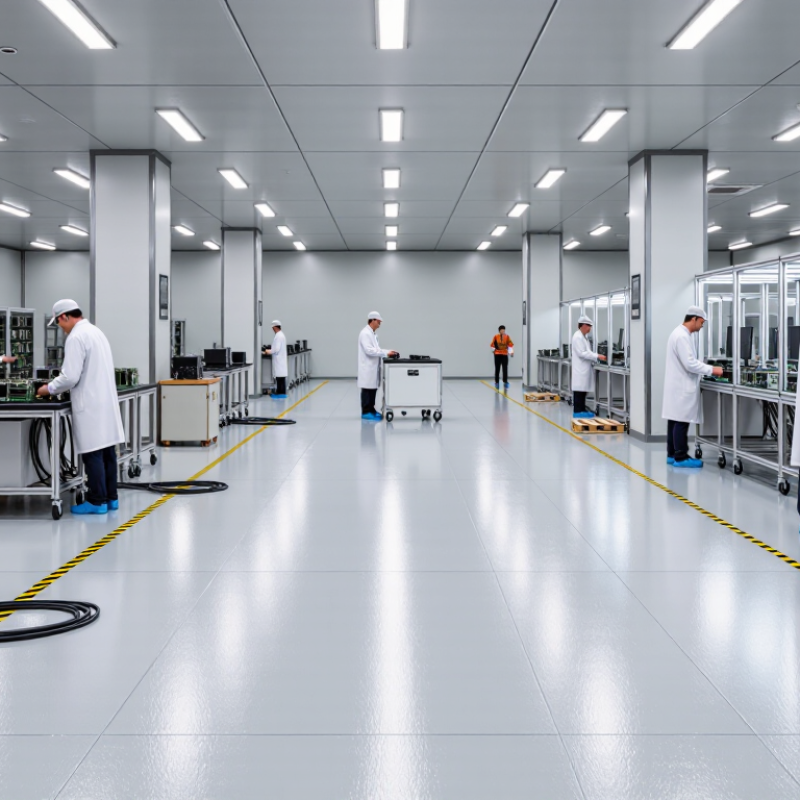
ESD-safe flooring is designed to control static electricity rather than simply block it. It usually combines conductive or static-dissipative materials with a reliable grounding system. When a worker walks across an ordinary floor, friction can create a hidden electrical charge. That charge may discharge near circuit boards, sensors, or other sensitive components. The spark may be invisible. The damage may appear days later.
Its importance becomes clear in electronics rooms, laboratories, medical production areas, and data facilities. A suitable floor helps move electrical charge away at a controlled rate. It also supports safer handling of sensitive equipment.
However, flooring alone cannot manage every ESD risk. Shoes, clothing, humidity, grounding points, and work habits also matter. The correct resistance range should follow the facility’s technical requirements and applicable standards.
A practical lesson from facility inspections is simple: the weakest point is often the grounding connection. Dust, worn seams, or careless repairs can reduce performance. Regular resistance testing can reveal these problems before equipment failures become expensive. Cleaning products also need careful selection, because some leave insulating films on the surface. I have found that installation plans sometimes look complete, yet daily maintenance receives little attention. That gap deserves honest review. A well-installed floor still needs records, inspections, and trained workers. It is protection, not a guarantee.
How China’s ESD Flooring Manufacturers Are Evaluated
China Top 10 ESD Safe Flooring Manufacturers
China’s ESD flooring manufacturers should be evaluated through verified performance, not catalog claims. A capable supplier provides factory test records, production dates, and traceable batch numbers. Testing should follow ASTM F150 for electrical resistance and IEC 61340-5-1 for electrostatic control systems. These standards help buyers compare resistance, grounding, and installation performance under consistent conditions.
Material selection matters on the factory floor. Vinyl tiles, conductive rubber, and raised-access systems respond differently to humidity, traffic, and cleaning chemicals. A 2023 MarketsandMarkets report identified electronics manufacturing and cleanroom expansion as major drivers of ESD-control demand. SEMI’s World Fab Forecast also reported continued investment in semiconductor production capacity, increasing the need for reliable flooring systems. Still, market growth does not prove product quality.
During factory audits, inspect mixing records, surface uniformity, copper strip placement, and welding details. Request resistance readings before and after installation. Check samples at several points, including corners and doorway transitions. ASTM F150 results alone may not reflect real site conditions. That is an uncomfortable weakness. Humidity changes, poor grounding, or careless maintenance can alter performance. An experienced manufacturer should discuss these risks openly and provide a maintenance schedule, installer training, and corrective-action records. Some suppliers may resist third-party testing. That deserves careful reflection.
How China’s ESD Flooring Manufacturers Are Evaluated
This chart presents a recommended procurement-weighting model for comparing ESD flooring manufacturers. The criteria reflect commonly documented requirements for electrostatic-control flooring, including electrical performance, compliance evidence, durability, installation quality, safety, and after-sales support. It is an evaluation framework rather than a ranking of individual companies.
Reference framework: IEC 61340-5-1, ANSI/ESD S20.20, ISO 9001 quality-management principles, and project-specific flooring specifications.
Top 10 ESD-Safe Flooring Manufacturers in China
China’s top 10 ESD-safe flooring manufacturers serve electronics, pharmaceutical, laboratory, and data-center projects. Their products commonly include conductive vinyl, static-dissipative tiles, epoxy systems, and raised access floors. Each option needs careful matching with the facility’s grounding plan.
Experienced manufacturers usually provide resistance data, installation guidance, and batch inspection records. Buyers should request test results based on recognized methods, such as IEC 61340-5-1 or ANSI/ESD S20.20. Surface resistance alone is not enough. Grounding continuity, humidity, adhesive quality, and cleaning chemicals also affect performance. A reliable supplier explains these limits clearly.
Factory evaluation matters. Inspect production controls, raw-material storage, welding quality, and packaging protection. Ask whether the manufacturer can produce samples before a full order. A small sample can reveal curling, color variation, bonding weakness, or uncomfortable surface texture. Some suppliers present impressive laboratory figures, yet installation results may differ. That gap deserves attention.
Not every ranking is absolute. Manufacturer capability can change with project size, export experience, and technical support. A stronger shortlist compares warranty terms, replacement availability, lead times, and installer training. Check the details. ESD flooring should remain stable under traffic, wheeled equipment, and routine maintenance. The best Chinese manufacturers combine controlled production with practical engineering advice, not only attractive quotations.
China Top 10 ESD Safe Flooring Manufacturers - Top 10 ESD-Safe Flooring Manufacturers in China
| Rank | Anonymous Manufacturer Profile | Main ESD Flooring Category | Typical Electrical Resistance | Common Thickness | Standard Panel or Roll Width | Typical Installation Environment | Commonly Referenced Standards |
| 1 | Profile 01 | Homogeneous conductive vinyl sheet | 10⁴–10⁶ Ω | 2.0–3.0 mm | 1.8–2.0 m roll | Electronics assembly and clean production rooms | IEC 61340-5-1; ANSI/ESD S20.20 |
| 2 | Profile 02 | Homogeneous dissipative vinyl tile | 10⁶–10⁹ Ω | 2.0–3.0 mm | 300 × 300 mm or 600 × 600 mm | Server rooms, laboratories and technical offices | IEC 61340-5-1; ASTM F150/F150M |
| 3 | Profile 03 | Conductive rubber sheet flooring | 10⁴–10⁶ Ω | 2.0–4.0 mm | 1.2–2.0 m roll | Heavy-use laboratories and industrial electronics areas | IEC 61340-5-1; EN 1081 |
| 4 | Profile 04 | ESD rubber tile flooring | 10⁶–10⁹ Ω | 2.0–3.0 mm | 600 × 600 mm | Production lines and equipment maintenance areas | IEC 61340-5-1; ASTM F150/F150M |
| 5 | Profile 05 | Epoxy conductive resin flooring | 10⁴–10⁶ Ω | 1.5–3.0 mm | Seamless system | Industrial rooms requiring seamless, chemical-resistant surfaces | IEC 61340-5-1; ANSI/ESD S20.20 |
| 6 | Profile 06 | ESD polyurethane flooring | 10⁶–10⁹ Ω | 2.0–4.0 mm | Seamless system | Wet-process areas and rooms exposed to frequent cleaning | IEC 61340-5-1; EN 1081 |
| 7 | Profile 07 | ESD raised-access floor system | 10⁶–10⁹ Ω surface finish | 30–40 mm panel | 600 × 600 mm | Data centers and rooms requiring underfloor cable access | IEC 61340-5-1; EN 12825 |
| 8 | Profile 08 | ESD access floor with steel panel | 10⁶–10⁹ Ω surface finish | 30–40 mm panel | 600 × 600 mm | High-load technical rooms and telecommunications facilities | IEC 61340-5-1; EN 12825 |
| 9 | Profile 09 | ESD carpet tile | 10⁶–10⁹ Ω | 5–8 mm | 500 × 500 mm | Low-noise offices, control rooms and electronics workspaces | IEC 61340-5-1; ANSI/ESD S20.20 |
| 10 | Profile 10 | ESD laminated access panel | 10⁶–10⁹ Ω surface finish | 30–40 mm panel | 600 × 600 mm | Modular offices and equipment rooms with flexible layouts | IEC 61340-5-1; EN 12825 |
Note: The resistance ranges and dimensions shown are typical technical ranges for ESD flooring systems. Actual values depend on the specific construction, grounding method, test conditions and product specification.
Product Types, Standards, and Performance Features
China Top 10 ESD Safe Flooring Manufacturers: Product Types, Standards, and Performance Features
ESD safe flooring protects sensitive electronics by controlling static charge. Common product types include conductive vinyl, static-dissipative tiles, rubber sheets, epoxy coatings, and raised access floors. Each option fits different environments. Vinyl tiles suit clean production rooms, while epoxy handles heavy carts and chemical exposure. Rubber provides comfort, but seams and moisture require careful control.
Reliable manufacturers should provide test data based on ANSI/ESD S20.20 and IEC 61340-5-1 practices. These references support controlled resistance, grounding, and regular verification. Conductive and dissipative floors use different resistance ranges. The correct range depends on equipment, footwear, and facility design. A low resistance number alone does not prove good protection. Grounding hardware, adhesive quality, and installation details also affect results.
Performance should be judged beyond electrical readings. Check abrasion resistance, slip control, fire behavior, stain resistance, and dimensional stability. In practical inspections, poorly prepared concrete often causes more trouble than the flooring material. That detail is easy to miss. Humidity can also change readings, especially during seasonal shifts. Manufacturers with strong technical support explain testing conditions, maintenance intervals, and repair methods clearly. Still, product brochures may simplify real site conditions. Independent verification remains wise before production starts.