What Is TV Surge Protection and How Does It Work?
A modern television quietly depends on a small but important defense: Tvs Surge Protection. Power lines can carry sudden voltage spikes caused by lightning, switching equipment, or unstable household wiring. These events may last only microseconds. Their damage can last for years.
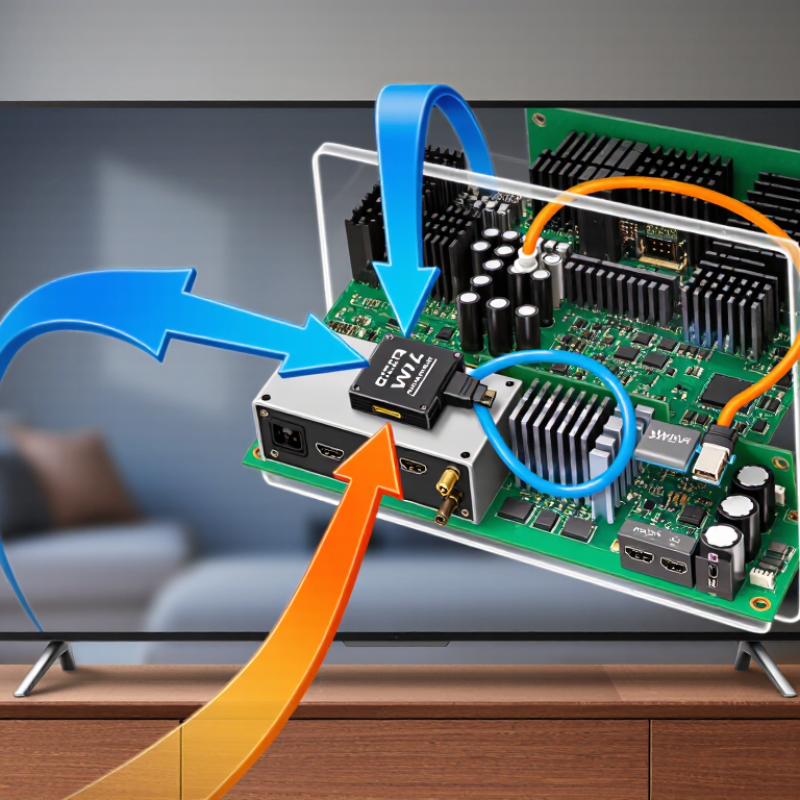
A TVS device works like a fast electrical pressure valve. Under normal voltage, it remains almost invisible to the circuit. When a surge exceeds its specified threshold, the device conducts excess energy away from sensitive components. The voltage is clamped to a safer level. In a television, this protection may support the power supply, HDMI ports, antenna input, and signal-processing circuits.
As electronics protection specialist Robert Kollman explained, “A protector must respond before the circuit does.” That principle defines effective Tvs Surge Protection. Speed matters. Clamping voltage matters. Energy capacity matters too.
Not every protector offers equal safety. A cheap component may react quickly but fail after one severe event. Another may survive larger pulses but leave sensitive chips exposed to excessive voltage. Installation quality also matters. Long wires can add inductance, creating a dangerous delay between the surge and the protective response.
Look closely at the specifications. Check the standoff voltage, clamping voltage, peak pulse current, and response time. These numbers describe real behavior, not marketing decoration. Still, specifications cannot predict every household condition. Protection is not magic.
A careful design combines TVS devices, grounding, fuses, filtering, and sensible cable routing. Even then, one uncomfortable truth remains: no device guarantees perfect protection against every surge. That limitation deserves honest attention.
What Is TV Surge Protection?
TV surge protection is a way to reduce sudden voltage spikes reaching a television. These spikes can travel through the power cord, antenna cable, coaxial line, or network cable. A surge protector responds to excessive voltage and diverts much of that energy toward ground. The TV then receives a safer electrical level. It is not a battery backup. It does not correct every power problem. That distinction matters.
Most plug-in protectors use metal-oxide varistors, often called MOVs. Under normal voltage, the component stays mostly inactive. During a spike, its resistance drops and redirects current. Some devices include thermal protection, indicator lights, and ports for signal cables.
In a living room, this matters when a television connects to a receiver, game console, and wired internet. One unprotected cable can still provide another path for damage. Protection is not perfect.
During practical inspections, I check for a grounded outlet, tight connections, and suitable electrical ratings. A loose ground can make a reliable device less useful. Surge ratings need careful reading; a larger joule number does not guarantee complete safety. Protectors can wear out after repeated events, even when the indicator light remains on. Severe lightning may exceed their design limits. For storm-prone homes, a qualified electrician may recommend whole-house protection alongside a plug-in unit. I still check every cable after installation, because assumptions fail. A protector can reduce risk, not remove it.
How Electrical Surges Can Damage a Television
A television can be damaged by a surge before its screen shows any warning. A surge is a brief rise in voltage that exceeds normal operating levels. Lightning, utility switching, and large household motors can create these events. The excess energy may enter through the power cord, HDMI cable, antenna line, or network cable. The power board often suffers first. Tiny components can burn instantly or weaken slowly. Months later, the television may show random restarts, distorted images, no sound, or a completely black screen. One detail is easy to miss. The television does not need to be turned on. If it remains plugged in, its internal circuits still connect to incoming electricity.
A surge protector reduces this risk by using components called metal oxide varistors. Under normal voltage, they remain mostly inactive. During a spike, they react quickly and redirect excess energy toward the grounding system. This action can happen within nanoseconds, but it is not magic. A protector cannot absorb unlimited energy, and poor grounding can reduce its effectiveness. Protection should also consider connected cables, not only the wall outlet. In practical inspections, a damaged cable connection is sometimes overlooked. It is tempting to assume that one protective device solves everything. That assumption needs reconsideration, especially in areas with frequent storms or unstable utility service. A properly installed whole-home device, combined with a suitable outlet protector, offers stronger coverage. Unplugging the television during severe storms remains the simplest physical separation.
How TV Surge Protectors Divert Excess Voltage
A TV surge protector limits sudden voltage spikes before they reach delicate circuits. The IEEE C62.41.2 standard describes common surge tests using an 8/20-microsecond current waveform. That pulse is extremely brief, but its energy can damage power supplies and HDMI components.
The U.S. Department of Energy has estimated that power disturbances cost the American economy between $119 billion and $188 billion annually. The figure covers many disturbance types, not only lightning surges.
Inside many protectors, metal-oxide varistors remain mostly inactive during normal operation. When voltage rises above a set threshold, their resistance drops sharply. They then divert excess current toward the grounding path. The protector absorbs or redirects part of the surge, while the television receives a lower voltage. A thermal safety device can disconnect an overheated component.
The easy explanation is incomplete, though. A poor ground can limit this protection. Coaxial and network cables may also carry surge energy around the power protector.
Tips: Choose protection tested to recognized safety standards, and inspect its indicator after major storms. Do not judge quality by joule numbers alone; ratings are not perfectly comparable across designs. Keep cables short and avoid tangled loops. A whole-home protective device can reduce surge exposure, while a plug-in unit adds another layer near the TV. It cannot guarantee zero damage. That expectation needs reconsidering.
Key Components Inside a TV Surge Protector
A TV surge protector is not a magic shield. Inside, the metal-oxide varistor (MOV) is usually the main defense. During a voltage spike, it changes from high resistance to low resistance. It redirects excess energy toward the grounding path. That path matters. Without a properly grounded outlet, protection can be incomplete. An internal thermal disconnect separates an overheated MOV from the circuit. This feature reduces fire risk after repeated surges. Some models also use a fuse or circuit breaker for backup protection.
Other components support the MOV. An EMI/RFI filter can reduce high-frequency electrical noise before it reaches the television’s power supply. A status indicator shows whether the protection circuit remains active. However, a glowing indicator does not prove every component still works. The clamping voltage and maximum surge-current rating deserve closer attention than a simple “high joule” label. IEEE power-quality guidance treats surge conditions as different from ordinary outages, so one rating cannot describe every event.
The National Severe Storms Laboratory reports that lightning causes over 1 billion dollars in U.S. damage each year. A Berkeley Lab report prepared for the U.S. Department of Energy estimated annual U.S. power-interruption costs between 28 and 169 billion dollars. These figures show why transient protection deserves practical attention, not just marketing language. A grounded outlet, short cable run, and correctly sized protector improve the setup. Still, no consumer device can absorb every severe surge. That limitation is easy to overlook.
How to Choose and Use TV Surge Protection Safely
What Is TV Surge Protection and How Does It Work?
A TV surge protector diverts excess voltage away from sensitive circuits. It usually relies on metal-oxide varistors that respond within a fraction of a cycle. The U.S. National Electrical Manufacturers Association explains that many surges begin inside buildings, often when motors switch on or off. External lightning remains a serious risk. Protection is not absolute.
Choose a device tested to UL 1449 requirements, and check its clamping voltage, energy rating, and maximum continuous voltage. A lower clamping voltage generally limits harmful voltage sooner. However, joule ratings alone can mislead. They do not describe every part of a protector’s performance. IEEE guidance, including IEEE C62.41.1, emphasizes that surge conditions vary by location and wiring design. Match the protector to a properly grounded outlet.
Use it carefully. Plug the television directly into the protector, rather than connecting multiple power strips together. Protect connected coaxial, antenna, or network lines when the device supports those paths. Otherwise, a surge may enter through another cable. Keep the unit ventilated and replace it after visible damage, overheating, or a strong surge event. An indicator light helps, but it is not proof of full protection.
I once treated a high rating as a guarantee. That was too simplistic. A surge protector cannot correct reversed wiring, poor grounding, or every lightning event. Have suspicious outlets inspected by a qualified electrician.
What Is TV Surge Protection and How Does It Work?
Standardized 1.2/50 μs surge-voltage waveform used to represent a fast electrical transient. The values are normalized to show how quickly a surge rises and decays.
A TV surge protector is designed to divert or limit short-duration overvoltage events before they reach sensitive circuits. Metal-oxide varistors and other protective components remain mostly inactive during normal operation, then conduct excess energy when the voltage rises above their operating range.
The chart shows why response speed matters: a surge can reach its peak in about 1.2 microseconds and then gradually decay. For safe use, choose a properly rated protector, connect it to a correctly grounded outlet, avoid daisy-chaining power strips, and replace the unit after a severe surge or visible damage.