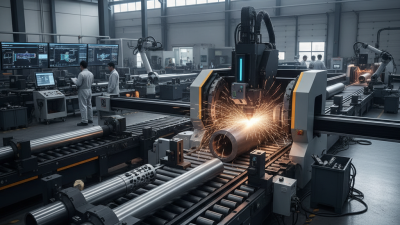
Choosing a tube laser cutting machine in 2026 is not simply a matter of comparing wattage and price. It is a production decision involving accuracy, material flow, software, safety, service, and future capacity. A machine that cuts impressive samples may still struggle with thin-wall profiles, reflective metals, or unstable tube loading.
David Belforte, a respected industrial laser technology analyst, has often emphasized this practical point: “The laser is only one part of the system.” That observation remains important. The cutting head, chuck design, nesting software, autofocus response, and fume extraction can influence results just as strongly as the laser source. A bright showroom demo proves little.
This 2026 Best Tube Laser Cutting Machine Buying Guide examines the details that are easy to overlook. It explains how power affects stainless steel, carbon steel, aluminum, and brass. It also considers round, square, rectangular, and irregular profiles. A six-meter tube rotating under a cutting head reveals problems quickly. Small alignment errors become visible on long frames. Poor software creates scrap. Weak support creates expensive downtime.
Real buying decisions are rarely perfect. A faster machine may need more maintenance. A lower-cost model may limit automation later. Even experienced buyers can underestimate operator training and floor space. This guide therefore compares performance with ownership risk, not only brochure specifications. It aims to help fabricators, furniture manufacturers, construction suppliers, and metal service centers choose equipment they can operate reliably. The final choice still requires testing your own materials, drawings, tolerances, and production volume. That step should never be skipped.
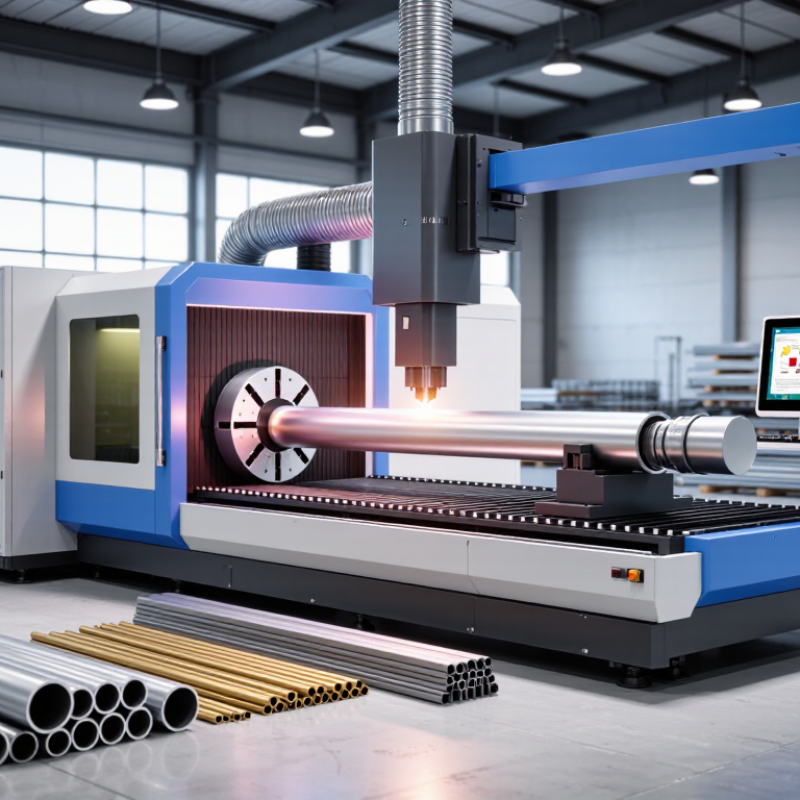
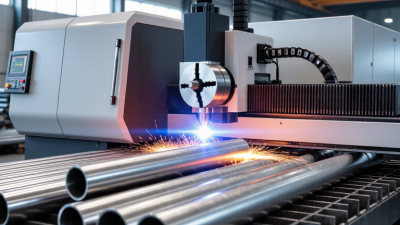
A tube laser cutting machine is an industrial system designed to cut hollow metal profiles with a focused laser beam. It can process round, square, rectangular, and oval tubes. Unlike a flatbed laser, it uses a rotating chuck to hold and turn the material. This movement allows the laser head to cut around the entire tube. It can also create holes, slots, notches, and angled ends. These features reduce manual drilling and improve production consistency.
In practical workshop use, the machine connects design software with automated cutting controls. Operators load a tube, select the correct material settings, and monitor the cutting path. Cutting quality depends on laser power, tube thickness, gas pressure, and accurate alignment. Thin walls may bend or burn if settings are poorly chosen. That part is easy to underestimate. A reliable machine should include stable clamping, safety enclosures, calibration functions, and clear error warnings. Still, automation cannot replace skilled inspection. I regularly check the first finished piece before continuing a full batch.
Tips: Ask for a sample cut using your actual tube size and material. Measure hole position, edge smoothness, and overall length. Check whether the software supports your common designs. Also, review maintenance access and operator training. A small test often exposes a large purchasing mistake.
| Buying Dimension | Typical Range or Specification | What It Means | Recommended Selection Consideration |
|---|---|---|---|
| Machine Type | Dedicated tube laser cutter, sheet-and-tube combination machine, or 3D tube laser system | A tube laser cutting machine uses a focused laser beam to cut round, square, rectangular, oval, and other metal profiles. | Choose a dedicated tube system for high tube-processing volume and a combination machine when both sheet and tube cutting are required. |
| Laser Source Type | Fiber laser, commonly available from approximately 1 kW to 6 kW for general tube fabrication | Fiber lasers are suitable for electrically conductive metals and generally offer high energy efficiency, fast cutting, and low routine maintenance. | Select power according to material, wall thickness, production speed, and required cut quality rather than choosing the highest available power. |
| Compatible Materials | Carbon steel, stainless steel, aluminum, galvanized steel, brass, and copper, subject to machine configuration | Different metals reflect laser energy and conduct heat differently, which affects cutting speed and maximum thickness. | Confirm the approved material list, assist-gas requirements, and manufacturer cutting charts before purchase. |
| Tube Diameter Capacity | Approximately 20–240 mm on many general-purpose models; specialized machines may support larger profiles | The maximum diameter determines the largest round tube and the approximate envelope of square or rectangular profiles that can be processed. | Measure the largest and smallest profiles in your production plan, including tolerances and loading clearance. |
| Maximum Tube Length | Common working lengths include approximately 6,000 mm and 9,000 mm; longer systems are available | The working length indicates the longest raw tube that can be supported and processed in one setup. | Match the machine length to standard stock sizes while considering loading, unloading, and factory floor space. |
| Typical Wall Thickness | Approximately 0.8–20 mm, depending on material, laser power, assist gas, and cutting speed | Wall thickness has a direct effect on cutting speed, heat input, edge quality, piercing time, and operating cost. | Use the thickest material that represents regular production, not an occasional maximum thickness, as the main sizing reference. |
| Chuck Configuration | Two-chuck, three-chuck, or four-chuck systems; pneumatic or electric clamping options | Chucks hold and rotate the tube during cutting. More controlled support can improve stability, especially with long or thin-walled profiles. | Consider automatic centering, clamping force adjustment, profile changeover time, and protection against tube deformation. |
| Positioning Accuracy | Often specified around ±0.03 to ±0.05 mm, depending on machine design and test conditions | Accuracy describes how closely the machine reaches programmed positions; finished-part accuracy also depends on tube quality and calibration. | Request acceptance-test data and verify repeatability, calibration procedures, and support for irregular or deformed tubes. |
| Maximum Cutting Speed | Rapid-motion speeds may reach approximately 80–120 m/min; actual cutting speed is lower and material-dependent | Rapid-motion speed is not the same as production cutting speed, which varies with geometry, thickness, material, and laser power. | Compare cycle times using real parts and nesting programs instead of relying only on the advertised maximum speed. |
| Assist Gas | Compressed air, oxygen, nitrogen, or a combination selected according to material and edge requirements | Assist gas removes molten metal, supports the cutting reaction, and influences edge oxidation, color, and surface quality. | Check gas pressure, purity, consumption, storage, and whether the factory has suitable compressors or gas supply equipment. |
| Automation Options | Manual loading, semi-automatic loading, automatic bundle loading, automatic unloading, and remnant management | Automation reduces manual handling and can improve throughput, safety, and consistency in repetitive production. | Select automation based on daily tube volume, raw-material variety, labor availability, and required unattended operating time. |
| Software Functions | Tube nesting, automatic profile recognition, collision avoidance, remnant tracking, and CAD/CAM file import | Software controls tube rotation, cutting paths, hole placement, nesting efficiency, and production data management. | Test the software with your actual CAD files and confirm compatibility with common formats such as DXF and standard production workflows. |
| Safety System | Enclosed cutting area, interlocked doors, emergency stops, beam shielding, fume extraction, and electrical protection | Safety features limit exposure to laser radiation, moving components, sparks, fumes, and high-voltage equipment. | Verify compliance with applicable local regulations, laser safety requirements, ventilation standards, and operator-training procedures. |
| Cooling and Maintenance | Closed-loop water chiller, protective window inspection, nozzle replacement, rail cleaning, and routine calibration | Stable cooling and regular maintenance help protect the laser source, cutting head, and mechanical system. | Review maintenance intervals, spare-parts availability, remote diagnostics, service response, and operator maintenance requirements. |
| Best-Fit Applications | Furniture frames, automotive components, fitness equipment, construction profiles, lighting structures, and agricultural machinery parts | Tube laser cutting can complete holes, slots, contours, miters, and end cuts in a single automated process. | Choose the machine when it can replace multiple operations such as sawing, drilling, punching, and manual fitting. |
| Total Cost of Ownership | Purchase price plus installation, electricity, assist gas, consumables, maintenance, labor, software, and training | The lowest initial price does not always provide the lowest cost per finished part. | Compare productivity, material utilization, downtime, energy use, service support, and expected annual operating hours. |
Note: The ranges shown are general industry reference values. Actual performance depends on machine design, laser power, material grade, tube geometry, wall thickness, assist gas, programming, and operating conditions.
How Tube Laser Cutting Technology Works
A tube laser cutting machine turns a digital drawing into controlled heat. A laser resonator creates a concentrated beam, which travels through optical components to a focusing head. The lens compresses the beam onto the tube surface, often forming a spot smaller than one millimeter. Assist gas then removes molten metal from the cut zone.
A CNC system controls movement along the tube’s length and circumference. Rotary chucks keep round, square, and rectangular profiles aligned while the head cuts holes, slots, miters, and complex contours. Fiber laser systems are widely used because they transfer energy efficiently into common metals. However, wall thickness, reflectivity, gas pressure, and heat buildup still affect edge quality. Small errors become visible.
Market data supports this technology’s growing relevance. MarketsandMarkets estimated the global laser cutting machine market at about USD 6.7 billion in 2023, with projected growth toward USD 10.4 billion by 2028. The report connects this expansion with automation, precision manufacturing, and shorter production cycles. Tube processing benefits from fewer setups and reduced secondary drilling. Yet reported productivity can look better than workshop reality. Loading time, calibration, scrap, and operator judgment remain difficult to measure. A reliable buying decision should compare complete cycle time, not only laser power or cutting speed.
A tube laser cutter should match your actual production materials, not an imagined workload. Measure your common tube diameters, lengths, wall thicknesses, and profiles. A machine may advertise impressive capacity, but usable capacity can shrink with fixtures and loading space. Check laser power against your steel, stainless steel, aluminum, and copper requirements. Higher power is not always better. It can increase energy use and operating cost.
Cutting accuracy, repeatability, and acceleration deserve close attention. Ask for test samples using your own tube dimensions and wall thicknesses. Inspect hole edges, bevels, burrs, and the final cut length. Chuck design also matters. Pneumatic or electric chucks should grip thin tubes without crushing them. Confirm the minimum residual length, automatic loading range, software compatibility, and programming support. I once saw a machine perform well on straight tubes but struggle with square profiles. Real testing reveals these gaps.
Choosing the right tube laser cutting machine starts with your materials, not the machine’s advertised power. Measure tube diameter, wall thickness, length, and surface condition. Thin stainless steel may need different settings than mild steel. Aluminum can reflect energy and demands careful parameter control. Ask for cutting samples using your actual material before making a decision.
Tips: Prepare three sample tubes. Check edge quality, piercing marks, heat distortion, and leftover scrap. Confirm the machine supports your required shapes, including round, square, rectangular, and irregular profiles. A larger capacity is not always better. It can increase cost, floor space, and setup time.
Pay close attention to loading methods and support systems. Long tubes need stable handling to prevent vibration during cutting. Automatic alignment can reduce operator effort, but it should not replace regular inspection. Review software compatibility, maintenance access, training, and service response. These details often matter more after installation. In practical testing, I have seen impressive cuts fail during continuous production. The sample looked perfect. The workflow did not. Leave room for that possibility. Choose equipment that matches your daily workload, quality targets, and operators’ real experience.
The chart shows typical starting laser-power levels for cutting 6 mm wall tube at a practical production speed. Carbon steel generally requires less power than stainless steel, aluminum, or copper. Actual performance depends on tube diameter, wall thickness, cutting speed, assist gas, nozzle condition, and machine setup, so use these values as a planning reference when selecting a tube laser cutter.
Installing a tube laser cutting machine requires more than placing it on a concrete floor. Check floor loading, ventilation, power quality, and material access before delivery. Keep it level. A slight frame twist can affect roundness, kerf accuracy, and chuck alignment.
During installation, technicians should verify grounding, emergency stops, guarding, and laser enclosure interlocks. Record the initial settings and test cuts. This creates a useful reference when production quality changes. Safety cannot be improvised. Operators need practical training on tube loading, rotating parts, assist gas, and protective equipment. Long materials also require stable supports to prevent sudden movement.
Maintenance costs are easier to control with a daily inspection routine. Clean lenses and nozzles carefully, remove metal dust, check cooling levels, and inspect cables for heat damage. Weekly checks should include chuck lubrication, guide alignment, and extraction filters. Neglected filters can reduce cutting quality and increase fire risk. Operating costs include electricity, assist gas, lenses, nozzles, labor, and downtime. Track each item per production batch rather than estimating monthly totals. A low purchase price may hide expensive consumables or difficult service access. In practice, even experienced teams miss small issues. A dirty nozzle once caused uneven piercing and several rejected tubes. That mistake costs more. Build inspection time into every shift, even when orders feel urgent.