What Is Laser Cutting and How Does It Work?
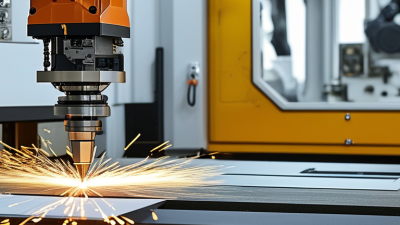
Laser cutting turns focused light into a precise manufacturing tool. It can shape steel, aluminum, acrylic, wood, and other materials with remarkable speed. The process begins inside a laser source, where energy creates a concentrated beam. Mirrors or fiber optics guide that beam toward a cutting head. A lens then focuses the light onto a tiny point.
Theodore Maiman, the laser pioneer, once said, “The laser is a solution looking for a problem.” Laser cutting shows how that idea became practical. The focused beam melts, burns, or vaporizes material along a programmed path. Assist gas, such as oxygen, nitrogen, or compressed air, removes molten debris from the cut.
The result can be clean and highly repeatable. It can also be imperfect. Heat may create a narrow affected zone, rough edges, discoloration, or slight warping. Material thickness, surface condition, lens quality, and cutting speed all influence the final result. Small settings matter.
A skilled operator does more than press “start.” They select the correct power, focal position, feed rate, and assist gas. They also inspect the cut edge under real working conditions. Computer control improves accuracy, but it does not replace judgment.
This guide explains what laser cutting is, how the equipment works, and why results vary between materials. It also examines safety, efficiency, and practical limitations. The technology is powerful. It still deserves careful testing.
What Laser Cutting Is and What It Can Process
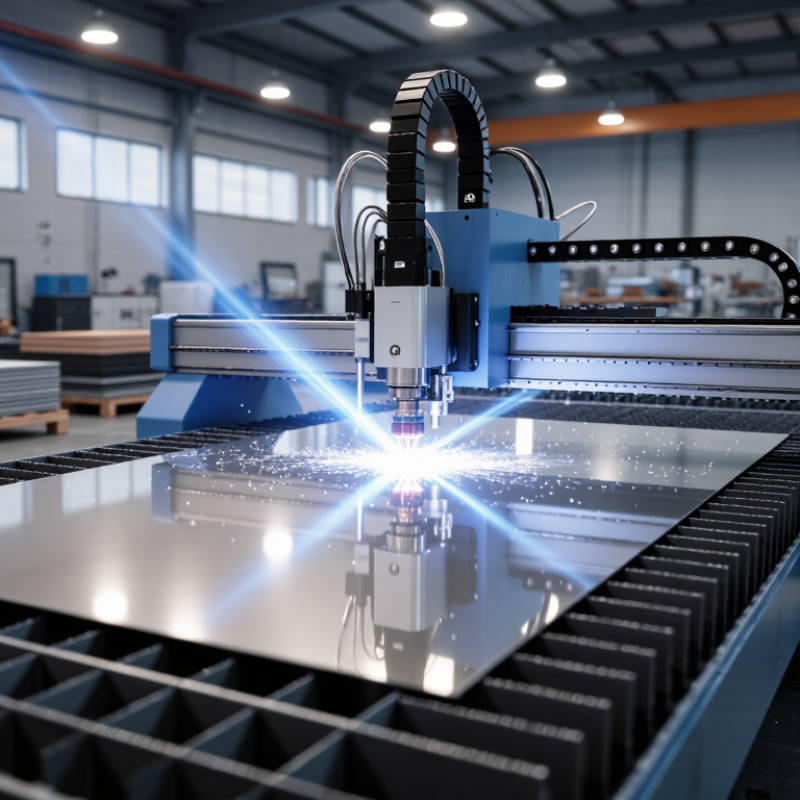
Laser cutting uses a focused beam of light to separate or shape material with controlled heat. The beam usually comes from a laser source and travels through mirrors or optical components. A lens narrows it to a tiny point. At that point, the energy melts, burns, or vaporizes the material.
The cutting head moves along a programmed path. An assist gas, such as air or nitrogen, pushes melted particles away from the cut. The machine adjusts power, speed, focus, and gas pressure for each material. Thin sheet metal may cut quickly, while thick plate requires slower movement and more energy. Wood, acrylic, fabric, paper, glass, and many plastics can also be processed, but their results differ greatly. Some plastics release dangerous fumes, so proper ventilation and material checks are essential.
Clean edges are possible. They are not automatic. I have seen small focus errors create rough corners and dark marks. Moisture, uneven surfaces, and incorrect settings can also reduce accuracy. Reflective metals demand extra care because they can redirect laser energy. Operators should test a small area before production, inspect the kerf width, and measure the finished part. A drawing may look perfect on screen, yet heat can still cause slight warping. That gap between digital design and physical material deserves attention.
How a Laser Generates and Focuses Cutting Energy
Laser cutting begins when electrical energy excites a gain medium, often a fiber, crystal, or gas. Excited particles release matching photons through stimulated emission. Mirrors guide these photons through the resonator. One partially reflective mirror then releases a concentrated beam.
The beam is not naturally ready to cut. Beam-shaping optics expand and align it before a focusing lens compresses its waist. At the focal point, energy density becomes extremely high, often within a spot measuring tens to hundreds of micrometres. The focused beam melts, vaporizes, or fractures material. Assist gas removes molten debris and helps protect the lens. Small changes in focus, nozzle height, or gas pressure can leave rough edges.
Precision depends on more than laser power. Material thickness, thermal conductivity, cutting speed, and lens quality all matter. A 2024 Grand View Research assessment estimated the global laser cutting machine market at about USD 6.83 billion in 2023, reflecting wider industrial adoption. The report also projected strong growth through 2030. Market growth, however, does not guarantee identical results across workshops.
In practical trials, operators often inspect the kerf under magnification. A clean upper edge can hide dross underneath. That detail is easy to miss. The focal position may need adjustment as thickness changes. No single setting works perfectly for every alloy, sheet, or production line. Calibration records and measured test cuts remain more reliable than assumptions.
What Is Laser Cutting and How Does It Work? - How a Laser Generates and Focuses Cutting Energy
| Process Dimension |
How It Works |
Typical Technical Characteristics |
Practical Result |
| Laser Generation |
An active medium is energized so that it produces stimulated emission. Mirrors and an optical cavity amplify and organize the light into a coherent beam. |
Common industrial sources include fiber, carbon dioxide, and diode-based lasers. The operating wavelength depends on the laser source. |
The machine receives a concentrated, controllable beam of optical energy. |
| Beam Delivery |
The beam travels through a delivery system to the cutting head. Depending on the source, delivery may use optical fiber or mirrors. |
The delivery path must preserve beam alignment and minimize optical losses. |
Stable beam delivery supports consistent cut quality across the work area. |
| Focusing |
A focusing lens reduces the beam diameter and concentrates the energy into a small focal spot on or near the material surface. |
Smaller spot sizes generally increase power density. The focal position must be matched to the material and thickness. |
High energy density enables localized melting, vaporization, or thermal separation. |
| Material Interaction |
The material absorbs laser energy and is rapidly heated. The affected zone can melt, vaporize, or chemically react depending on the material and settings. |
Absorptivity varies with material type, surface condition, wavelength, temperature, and angle of incidence. |
The cut is formed without direct mechanical contact between the tool and workpiece. |
| Assist Gas |
A gas stream is directed through the cutting nozzle to remove molten material and protect the process zone. |
Oxygen can support exothermic cutting of some metals; nitrogen is commonly used when oxidation must be minimized; air may be suitable for selected applications. |
Appropriate gas selection improves edge cleanliness, cutting speed, and control of oxidation. |
| Motion Control |
Computer-controlled axes move the cutting head or workpiece along programmed toolpaths. |
Cutting performance depends on laser power, travel speed, acceleration, pierce settings, focus position, and gas pressure. |
Complex profiles, holes, slots, and fine details can be produced from digital drawings. |
| Heat-Affected Zone |
Heat conducts outward from the kerf, changing the temperature of nearby material without necessarily melting it. |
The zone is usually narrower than in many conventional thermal cutting processes, but it depends on material, thickness, speed, and energy input. |
Limited thermal distortion and reduced finishing requirements are possible when parameters are properly controlled. |
Common Industrial Laser Types
| Laser Type |
Typical Wavelength |
Commonly Processed Materials |
Key Characteristics |
| Fiber Laser |
Approximately 1.03–1.08 μm |
Carbon steel, stainless steel, aluminum, copper, brass, and other metals |
Efficient beam delivery through optical fiber and strong suitability for many metal-cutting applications. |
| Carbon Dioxide Laser |
Approximately 10.6 μm |
Wood, acrylic, plastics, textiles, paper, glass, and some metals |
A longer infrared wavelength is strongly absorbed by many nonmetallic materials. |
| Diode Laser |
Commonly about 0.8–1.0 μm, depending on the diode design |
Selected metals, plastics, and specialized industrial materials |
Compact semiconductor-based architecture; suitability depends strongly on wavelength, beam quality, and application. |
Note: Cutting speed, maximum thickness, kerf width, edge quality, and heat input vary with laser power, material grade, thickness, focal position, assist gas, nozzle design, and machine settings.
How Laser Cutting Separates Material Step by Step
Laser cutting separates material through concentrated light, heat, and controlled movement. A laser source produces a narrow beam, which mirrors guide toward a focusing lens. The lens compresses the beam into a tiny spot, often less than one millimeter wide. At this point, energy density becomes high enough to melt, burn, or vaporize the workpiece.
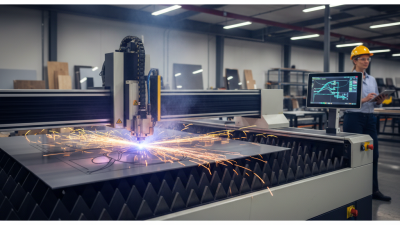
The cutting head moves along programmed paths while an assist gas clears molten material from the kerf. Oxygen can support oxidation in carbon steel, while nitrogen often protects stainless steel edges from discoloration. Sensors may adjust height and power as the sheet changes. The process sounds perfectly predictable. It is not. Surface rust, reflected light, poor focus, or an uneven sheet can widen the cut and leave dross underneath.
Material thickness controls the outcome. Thin sheet may need rapid motion and lower power, while thicker plate requires slower travel and deeper heat penetration. According to Grand View Research’s 2024 laser cutting machine report, the global market was valued at roughly USD 5 billion in 2023, reflecting wider industrial adoption. That growth does not remove the need for measurement. Operators still inspect kerf width, edge squareness, heat-affected zones, and dimensional accuracy after cutting. A 2023 report from MarketsandMarkets also identified automation and higher-power systems as major market trends, yet higher power alone cannot correct poor gas pressure or incorrect focal position.
Key Machine Components and Their Roles
What Is Laser Cutting and How Does It Work?
Key Machine Components and Their Roles
Laser cutting works by focusing intense light onto a small area of material. The beam melts, burns, or vaporizes the target along a programmed path. A reliable cut depends on several machine components working together, not the laser alone.
The laser source creates the beam and determines available power and wavelength. Mirrors or fiber delivery systems guide that beam toward the cutting head. Inside the head, a focusing lens narrows the beam to a precise spot. A dirty lens can produce rough edges, excess heat, or incomplete cuts. Small problems matter.
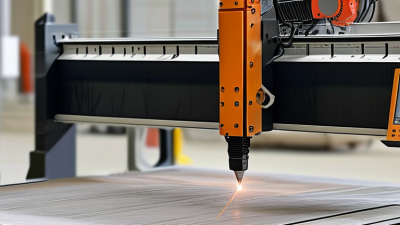
The nozzle directs assist gas across the cut zone. Oxygen can support cutting in some materials, while nitrogen often helps produce cleaner edges. Gas pressure must match material thickness and cutting speed. The motion system moves the head along X, Y, and sometimes Z axes. Its accuracy controls corners, curves, and repeated parts. The controller translates digital drawings into movement, power, and timing commands.
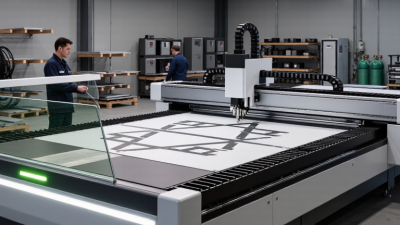
The worktable supports the sheet and allows waste heat and debris to escape. An exhaust system removes smoke and fine particles from the enclosure. Sensors monitor height, position, and operating conditions. They help prevent collisions and maintain a steady focus distance. In practice, calibration is never a one-time task. Material batches vary, and operators may need to adjust speed, focus, or gas flow after inspecting the first cut. A shiny edge is not always a strong edge.